How Indian Companies Are Redesigning CSR Post Schedule VII Amendments
Published on 27 January 2026
Disclaimer: Some links in this site are affiliate links. As an Amazon Associate, we earn from qualifying purchases.
Table of Contents
The Evolution of CSR in India: From Philanthropy to Strategic Integration
India’s corporate social responsibility (CSR) landscape has undergone a dramatic transformation since the landmark Companies Act of 2013 made CSR spending mandatory for certain companies.
The subsequent amendments to Schedule VII—which outlines permissible CSR activities—have fundamentally reshaped how Indian companies approach their social responsibilities.
What began as compliance-driven philanthropy has evolved into sophisticated, strategic programs designed to create measurable social impact while aligning with business objectives.
This article explores the innovative ways Indian corporations are redesigning their CSR initiatives in response to regulatory changes, emerging social needs, and stakeholder expectations.
Understanding The Regulatory Framework & CSR Post Schedule VII Amendments
Schedule VII of the Companies Act serves as the foundational framework that defines what qualifies as CSR activities in India. Recent amendments have broadened the scope to include newer areas while emphasizing measurable impact and sustainability. Key changes include:
- Expanded scope to include contributions to incubators, publicly funded universities, and rural development projects
- Greater emphasis on environmental sustainability and climate action
- Increased focus on healthcare, education, and rural development during the pandemic
- Clarification on administrative overheads and impact assessment requirements
These amendments have pushed companies beyond checkbook philanthropy toward more strategic, outcome-focused interventions. The regulatory push has coincided with growing stakeholder pressure for genuine social impact, creating a perfect storm for CSR innovation.

Image Credit: Nano Banana Pro
Strategic Redesign: Five Key Shifts in Indian CSR Programs
1. From Isolated Projects to Integrated Value Creation in CSR Post Schedule VII Amendments
Forward-thinking Indian companies are moving beyond standalone CSR projects to develop integrated models that create shared value for both communities and businesses. Instead of treating CSR as a separate department with disconnected initiatives, companies like Tata Group and Mahindra & Mahindra have woven social responsibility into their core business strategies. This approach recognizes that sustainable business growth is intrinsically linked to community wellbeing and environmental health.
Example in action: ITC’s Integrated Rural Development Program connects agricultural initiatives with the company’s supply chain needs, creating a virtuous cycle where farmers receive training and support while the company secures higher-quality raw materials. This alignment of business and social objectives represents a sophisticated evolution beyond traditional philanthropy.

2. Measurement and Impact Assessment Revolution in CSR Programs Post Amendments
The amended CSR rules requiring impact assessment have catalyzed a data-driven transformation in how companies plan, execute, and evaluate their social initiatives. Indian corporations are increasingly adopting rigorous monitoring frameworks and technology solutions to track outcomes rather than just outputs. This shift represents a fundamental change from measuring “money spent” to assessing “impact created.”
Measurement tools gaining traction
- Social Return on Investment (SROI) frameworks
- Technology platforms for real-time monitoring
- Third-party impact evaluations
- Community feedback mechanisms

3. Collaborative and Multi-Stakeholder Approaches
Recognizing the complexity of social challenges, companies are increasingly embracing partnership models that leverage diverse expertise and resources. after the Schedule VII amendments.
These collaborations span corporate-NGO partnerships, public-private initiatives, cross-sector alliances, and even corporate-corporate collaborations on shared social priorities. Such approaches allow for greater scale, specialized expertise, and sustainable solutions that no single entity could achieve alone.
Noteworthy collaboration: The Hindustan Unilever Foundation partners with numerous NGOs and government agencies to address water security across multiple states, creating interventions that combine corporate resources with grassroots implementation expertise and policy influence.

4. Focus on Scalability and Sustainable Exit Strategies
A critical redesign element in contemporary CSR is the emphasis on creating self-sustaining models that don’t create permanent corporate dependency. Indian companies are increasingly designing programs with clear exit strategies and sustainability roadmaps from the outset.
It’s particularly now evident in the programs of CSR post Schedule VII Amendments.
This represents a maturation from perpetual corporate-supported initiatives to programs designed to eventually operate independently through community ownership, government integration, or economic viability.
Implementation strategy: Many companies now employ a phased approach where initial intensive corporate support gradually transitions to community-led management, often supplemented by linkages to government schemes or revenue-generating components that ensure long-term viability.

Technology as a Catalyst in CSR Redesign
Technology has emerged as a powerful enabler in the CSR transformation, allowing companies to achieve greater reach, efficiency, and impact measurement.
From blockchain for transparent fund tracking to mobile platforms for last-mile delivery of services, Indian companies are leveraging digital solutions to overcome traditional implementation challenges.
Essential technology tools for modern CSR Programs
Field Documentation Equipment
For capturing authentic stories and monitoring progress, high-quality recording equipment is essential. The Sony Alpha 7 IV Camera offers exceptional 4K footage capabilities perfect for documenting CSR initiatives in challenging field conditions, while the DJI RS 3 Mini Gimbal Stabilizer ensures smooth, professional shots even in dynamic environments.
Community Engagement Tools
Clear communication with stakeholders requires reliable audio equipment. The RØDE VideoMic Pro+ provides premium audio capture for interviews and community feedback sessions, while the Rode Wireless GO II System enables seamless wireless recording during field visits and community meetings.
Data Collection and Monitoring
Mobile-based survey tools, GIS mapping applications, and real-time monitoring dashboards have revolutionized how companies track implementation and impact, allowing for course correction and adaptive management based on field data.
Sector-Specific Innovations in CSR Redesign
Healthcare Initiatives
Post-pandemic, healthcare CSR has evolved from infrastructure support to integrated health systems strengthening.
Companies like Cipla and Apollo Hospitals are developing innovative telemedicine platforms, mobile clinics, and health worker training programs that create sustainable healthcare access rather than temporary medical camps.
Educational Programs
Educational CSR has shifted from school construction to quality enhancement and learning outcome improvement. Initiatives now focus on teacher training, digital learning tools, STEM education, and vocational skills aligned with market needs.

Companies like Infosys and Wipro have pioneered scalable educational interventions that leverage their technological expertise.
Environmental Sustainability
With climate change gaining prominence in CSR Post Schedule VII Amendments, environmental CSR has expanded beyond tree planting to comprehensive climate action. Companies are now investing in circular economy models, renewable energy for communities, water stewardship initiatives, and biodiversity conservation programs with measurable ecological impact.
Rural Development
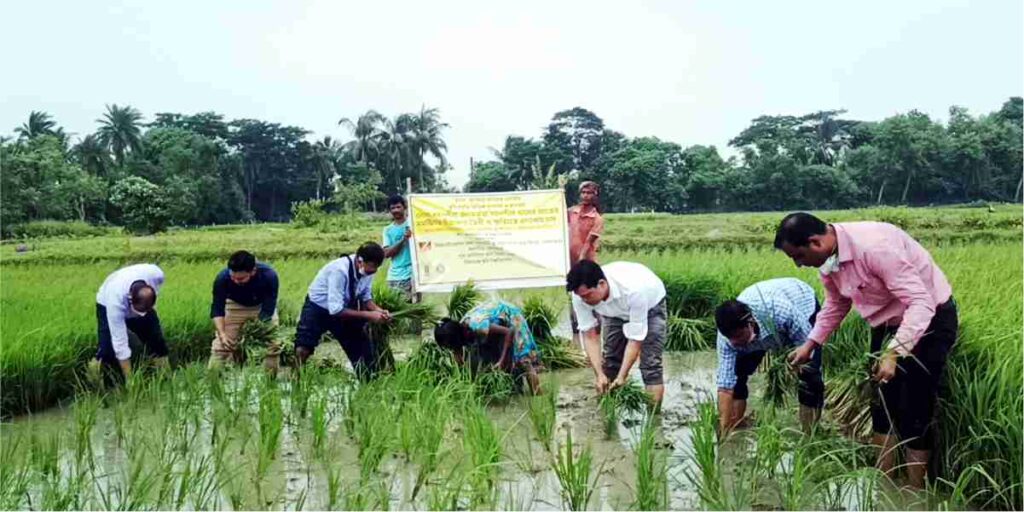
Rural CSR programs have evolved from welfare approaches to economic empowerment models. These include farmer producer organizations, agri-tech solutions, rural entrepreneurship development, and market linkage initiatives that create sustainable livelihoods rather than temporary relief.

Challenges in CSR Redesign and Strategic Responses after Schedule VII Amendments
Despite significant progress, companies continue to face challenges in CSR implementation:
Capacity Constraints: Many organizations struggle with internal expertise to design and manage sophisticated CSR programs. Strategic response includes investing in specialized CSR talent development and leveraging external expertise through consulting partnerships.
Geographic Dispersion: Reaching remote communities with consistent quality poses logistical challenges. Solution approaches include hub-and-spoke models, local partnership development, and technology-enabled service delivery.
Impact Measurement Complexity: Quantifying social change remains difficult, particularly for soft outcomes like empowerment or behavior change. Leading companies are addressing this through mixed-method approaches combining quantitative metrics with qualitative stories of change.
Sustainability Beyond Funding: Ensuring program continuity post-corporate funding remains challenging. Innovative responses include designing revenue-generating components and facilitating government convergence from the outset.
The Future Trajectory of CSR in India
As Indian companies continue to refine their CSR approaches post Schedule VII amendments, several emerging trends are likely to shape the next phase of evolution.
ESG Integration in the CSR Programs Post Amendments: CSR is increasingly converging with broader Environmental, Social, and Governance (ESG) frameworks, creating a more holistic approach to corporate responsibility.
Impact Investing: Some companies are exploring impact investing alongside traditional CSR, using patient capital to address social challenges while potentially generating financial returns.
Employee Engagement: Progressive companies are designing participatory models that engage employees in CSR design and implementation, recognizing the dual benefits of enhanced social impact and improved employee satisfaction.
Policy Advocacy: Beyond direct implementation, companies are increasingly engaging in policy dialogue to address systemic barriers to social development, leveraging their experience and influence to shape enabling environments.
Technology Innovation in the CSR Programs: Continued technological advancement will likely drive further innovation in CSR delivery, with AI, blockchain, and IoT offering new possibilities for scale, personalization, and impact measurement.
Conclusion: Toward Mature, Impact-Focused CSR Post Schedule VII Amendments
The redesign of CSR programs following Schedule VII amendments represents a significant maturation of India’s corporate responsibility landscape.
What began as regulatory compliance has evolved into a strategic opportunity for companies to demonstrate leadership, build trust, and contribute meaningfully to national development priorities.
The most successful companies are those viewing CSR not as a legal obligation but as an integral component of their long-term business strategy and social license to operate.
As this transformation continues, companies that embrace authentic engagement, rigorous impact measurement, innovative partnerships, and sustainable models will not only comply with regulations but will also build stronger, more resilient relationships with communities and stakeholders.
In doing so, they contribute to a more equitable and sustainable future while strengthening their own organizational resilience and reputation.
The journey from compliance-driven philanthropy to strategic social impact is well underway in India, offering valuable lessons for corporate responsibility globally.
As companies continue to innovate and adapt, the potential for business to be a genuine force for positive social transformation has never been greater.
Some product links in this article are affiliate links. As an Amazon Associate, we earn from qualifying purchases. All product recommendations are based on genuine assessment of utility for CSR and nonprofit professionals.
Things you may find useful for field works:
- Leather Cover Field Notebook
- SD Card Reader for iPhone, Memory Card Reader with USB-C to Light-ning Adapter Plug and Play Trail Game Camera Micro SD Card Viewer Support SD/TF Card and USB for iPad No App Required (Black)
- Clipboards with storage: Sooez Clipboards with Storage, High Capacity Clip Boards 8.5×11 with Storage, Heavy Duty Nursing Clipboard Folder, Plastic Clipboard with Pen Holder for Women Teachers Work, School & Office Supplies
- Waterproof document folders: Upgraded Two Pockets Fireproof Document Bag (2000℉), andyer 15”x 11”Waterproof Fireproof Money Bag for Cash with Zipper, Important Document Storage Organizer for Valuables, Legal Documents Safe
- Portable power banks: AsperX Laptop Power Bank, 165W 20,000mAh, Retractable Cables, Aluminum Alloy Unibody Portable Charger Power Bank, Battery Bank for MacBook Pro/Air/iPhone 17/iPad Pro/S25 Ultra/Dell/HP(TSA-Approved)
- Amazon Basics LCD 8-Digit Desktop Calculator, Portable and Easy to Use, Black, 1-Pack